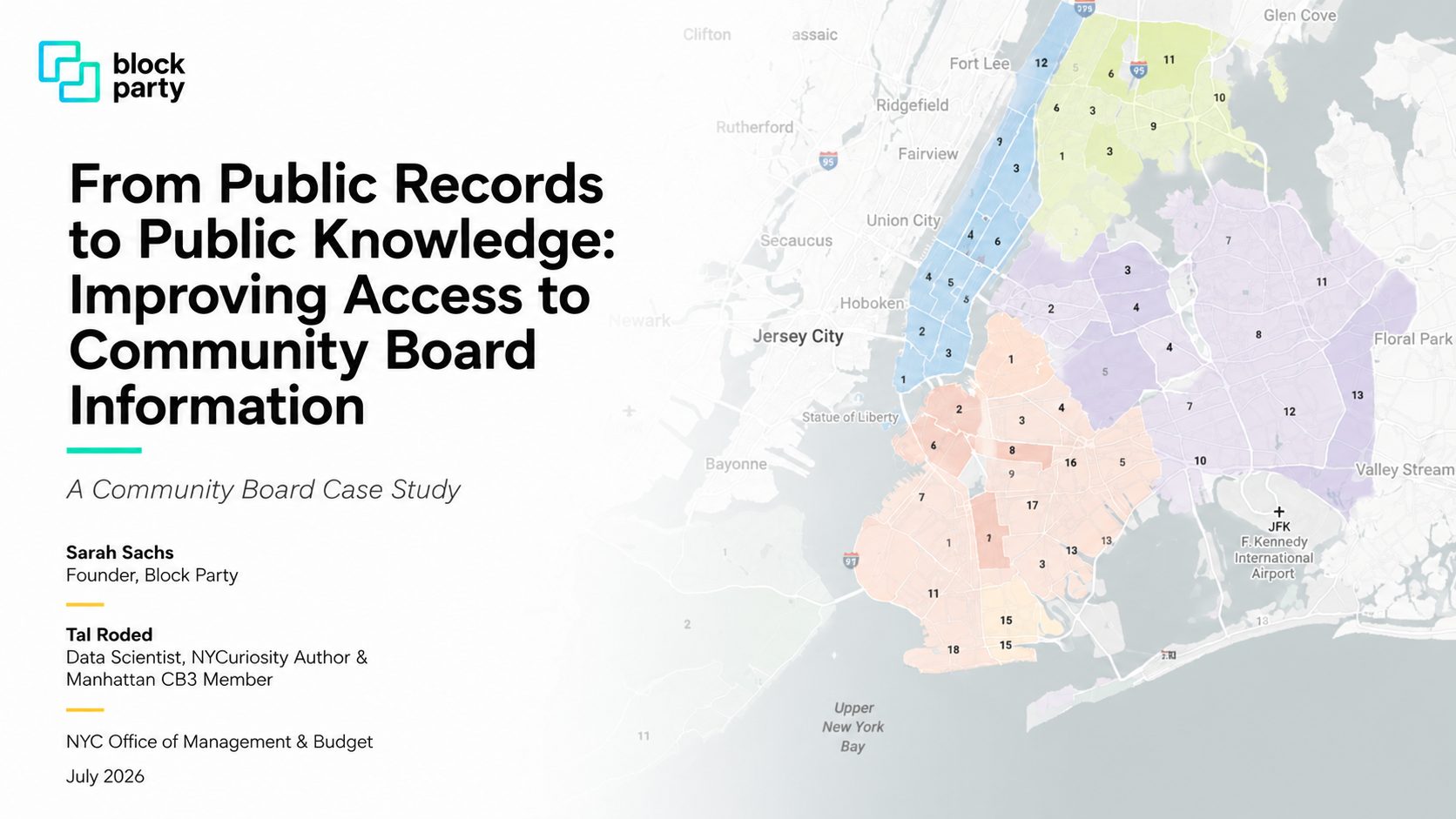
"Every month, thousands of New Yorkers spend hours participating in public meetings. Those conversations become part of the public record—but what happens to that knowledge afterward?"
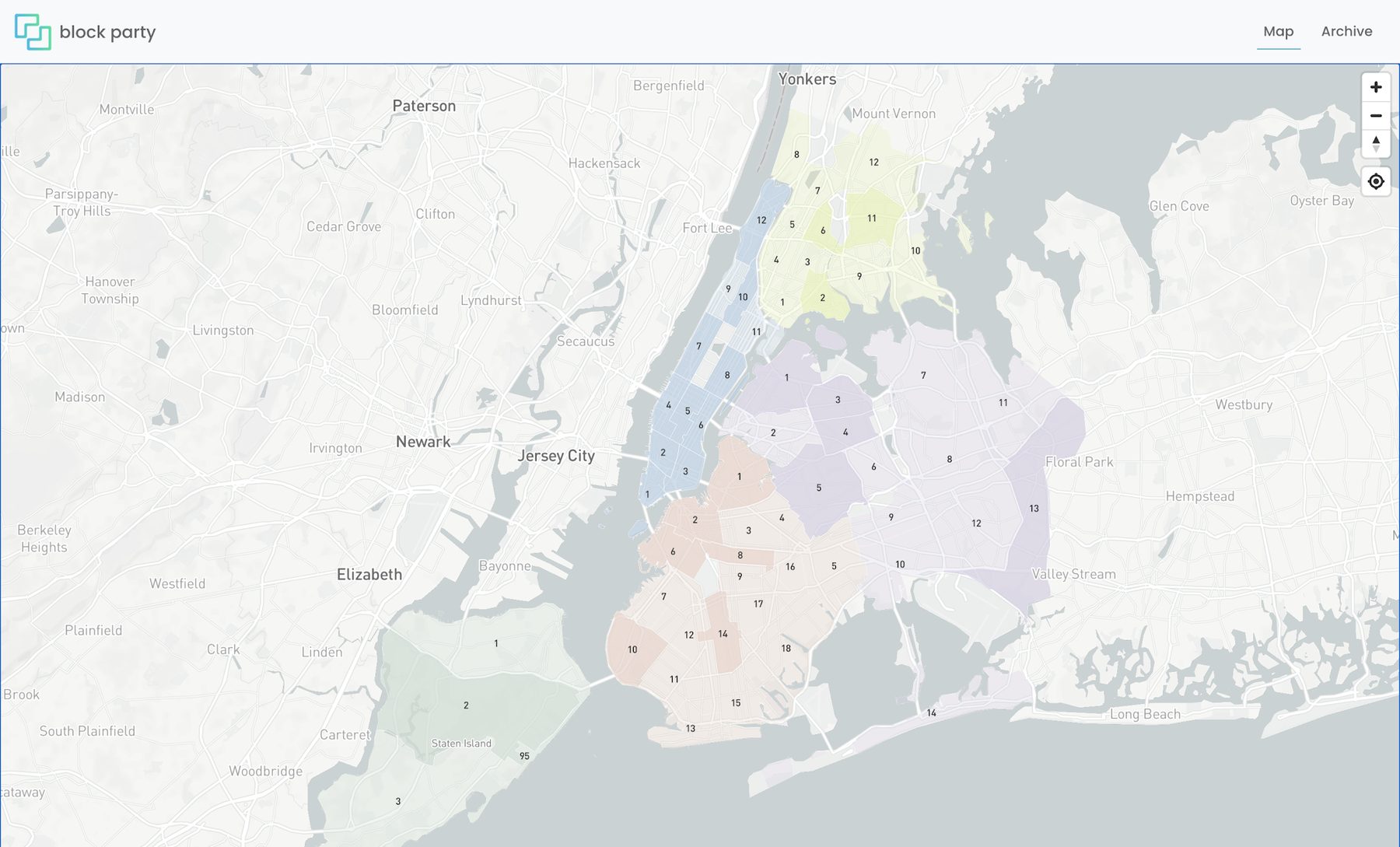
Have you ever attended a Community Board Meeting?
Most folks we ask, typically respond with a confused look...
Have you ever attended a community board meeting?
I see some nods in the virtual crowd, it looks like some of us have attended, but maybe not as much as we would like.
while some of us have attended these meetings, why are they important?
Why are Community Boards important?
local
Community boards produce more structured civic data than almost any other level of government.
Stakeholders,
Policy,
Participation,
Decisions…
Have you ever attended a community board meeting?
I see some nods in the virtual crowd, it looks like some of us have attended, but maybe not as much as we would like.
while some of us have attended these meetings, why are they important?
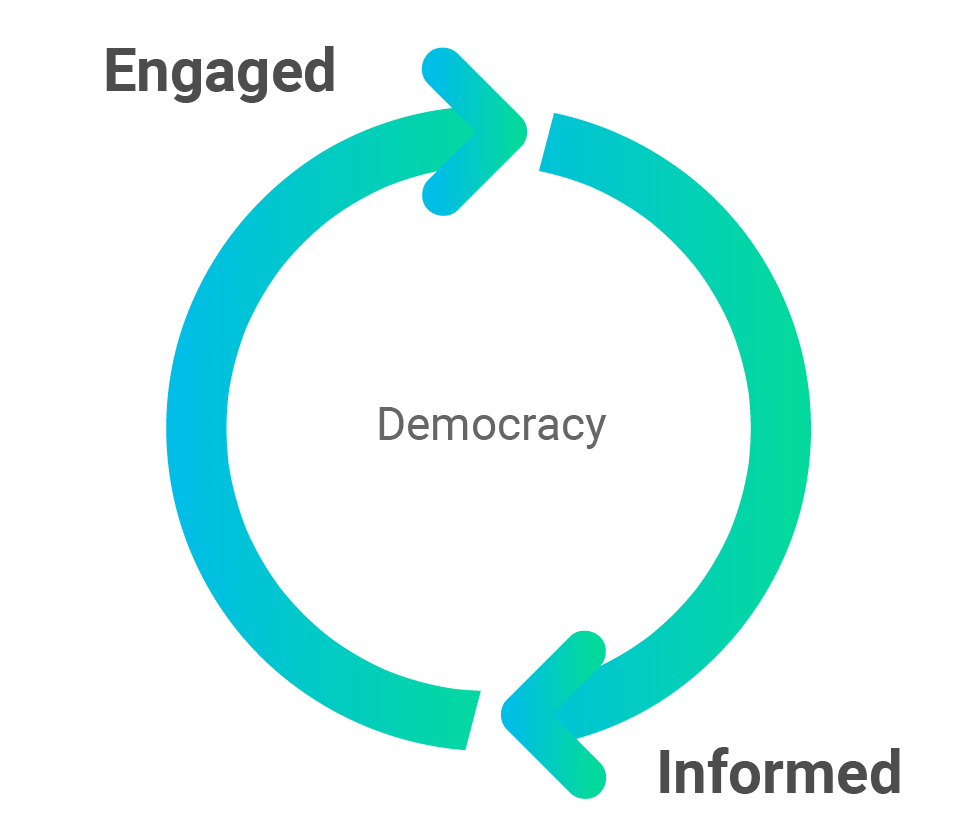
How might technology be used to help make local democracy more accessible?
Have you ever attended a community board meeting?
I see some nods in the virtual crowd, it looks like some of us have attended, but maybe not as much as we would like.
while some of us have attended these meetings, why are they important?
How might technology be used to help make local democracy more accessible?
Block Party
Have you ever attended a community board meeting?
I see some nods in the virtual crowd, it looks like some of us have attended, but maybe not as much as we would like.
while some of us have attended these meetings, why are they important?
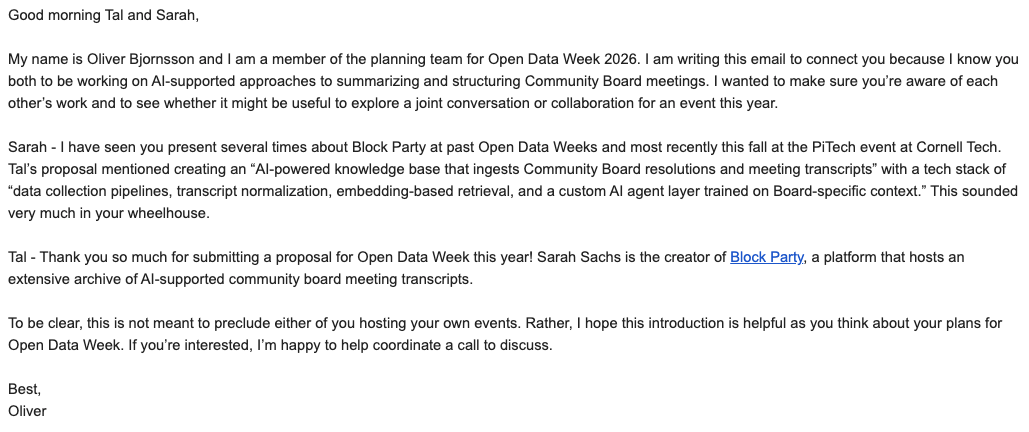


Our Story - Cheers to the NYC Civic Tech Community!

Have you ever attended a community board meeting?
I see some nods in the virtual crowd, it looks like some of us have attended, but maybe not as much as we would like.
while some of us have attended these meetings, why are they important?
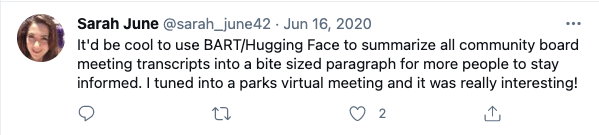
What if we could summarize the meeting information?
Have you ever attended a community board meeting?
I see some nods in the virtual crowd, it looks like some of us have attended, but maybe not as much as we would like.
while some of us have attended these meetings, why are they important?
Community Board Meetings can be inaccessible.
Had to make the transcripts ourselves…
Community Board meetings on average last 02:00:00
Had to make the transcripts ourselves…
The longest Community Board meeting in our Archive lasted 07:22:17
Had to make the transcripts ourselves…
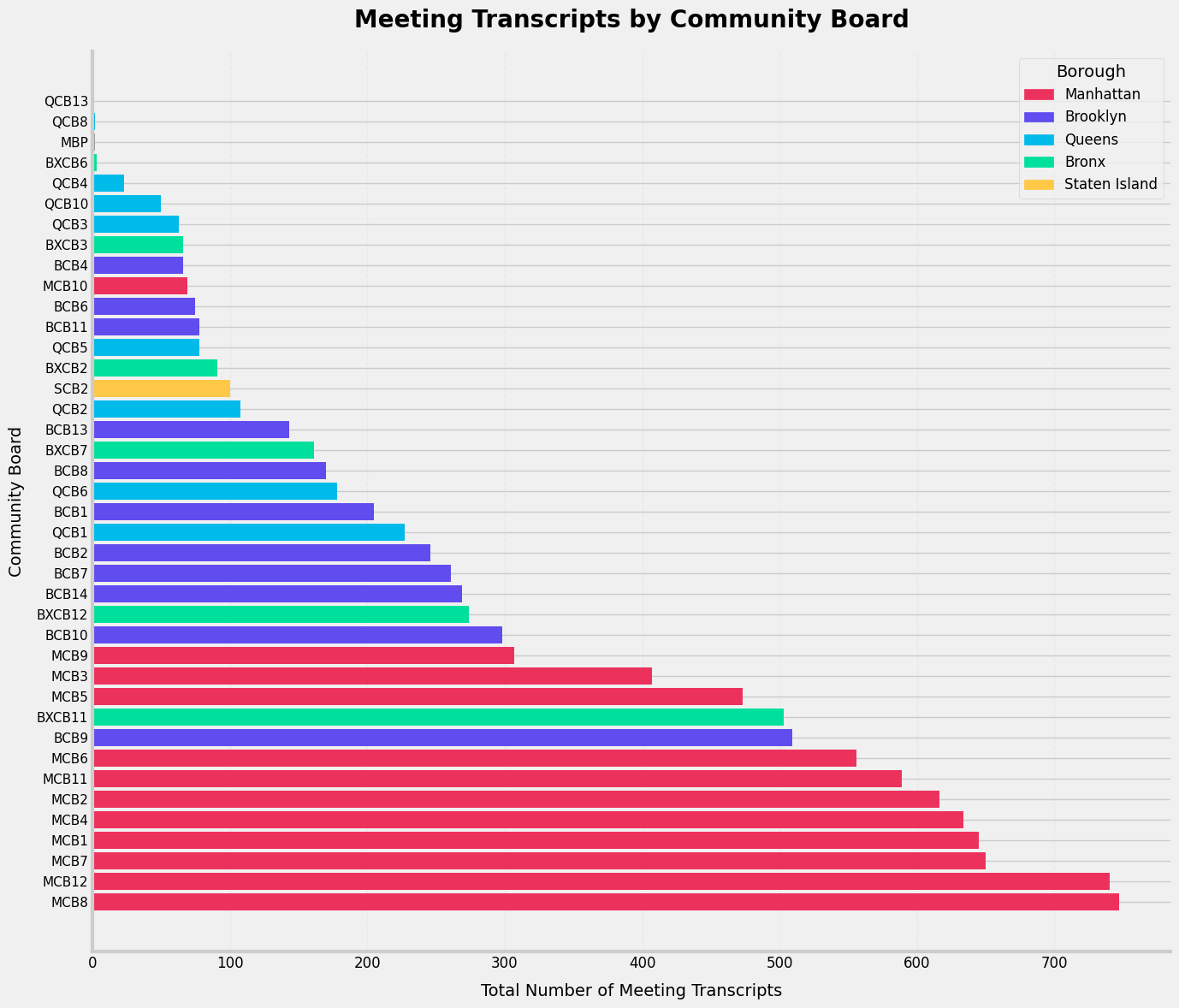
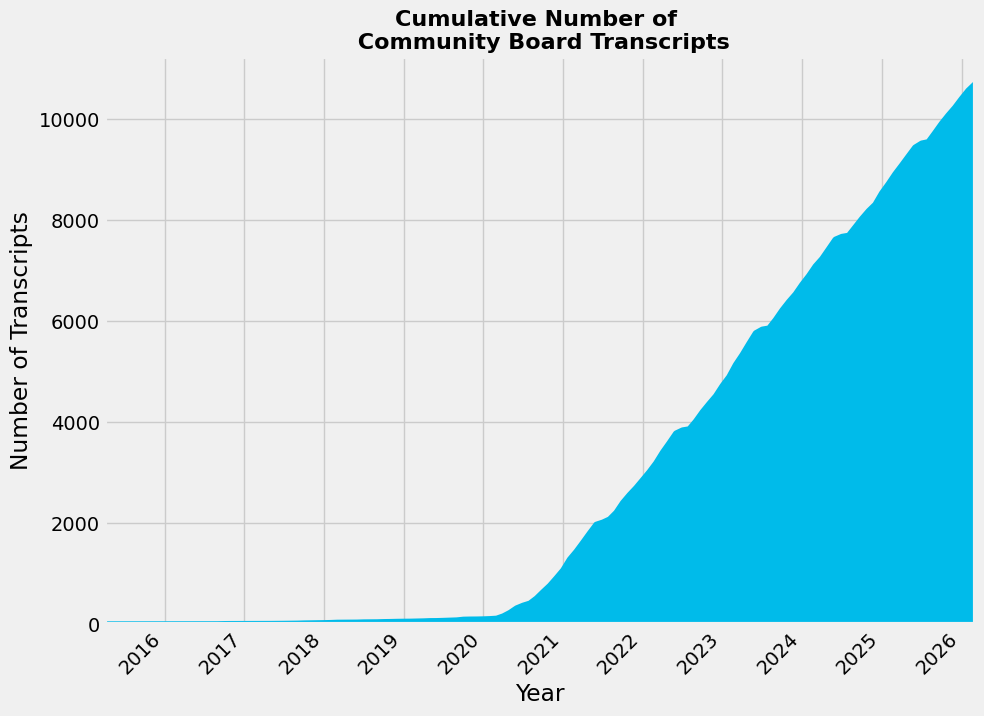
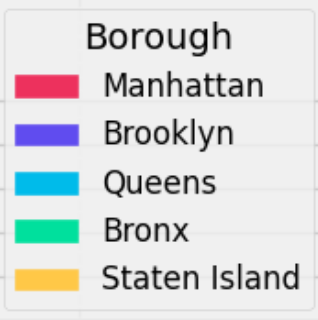

As our Archive of transcript data grew over the years, Block Party continued to evolve
Where over the past 6 years we have collected hundreds of meeting transcripts across districts representing each borough.
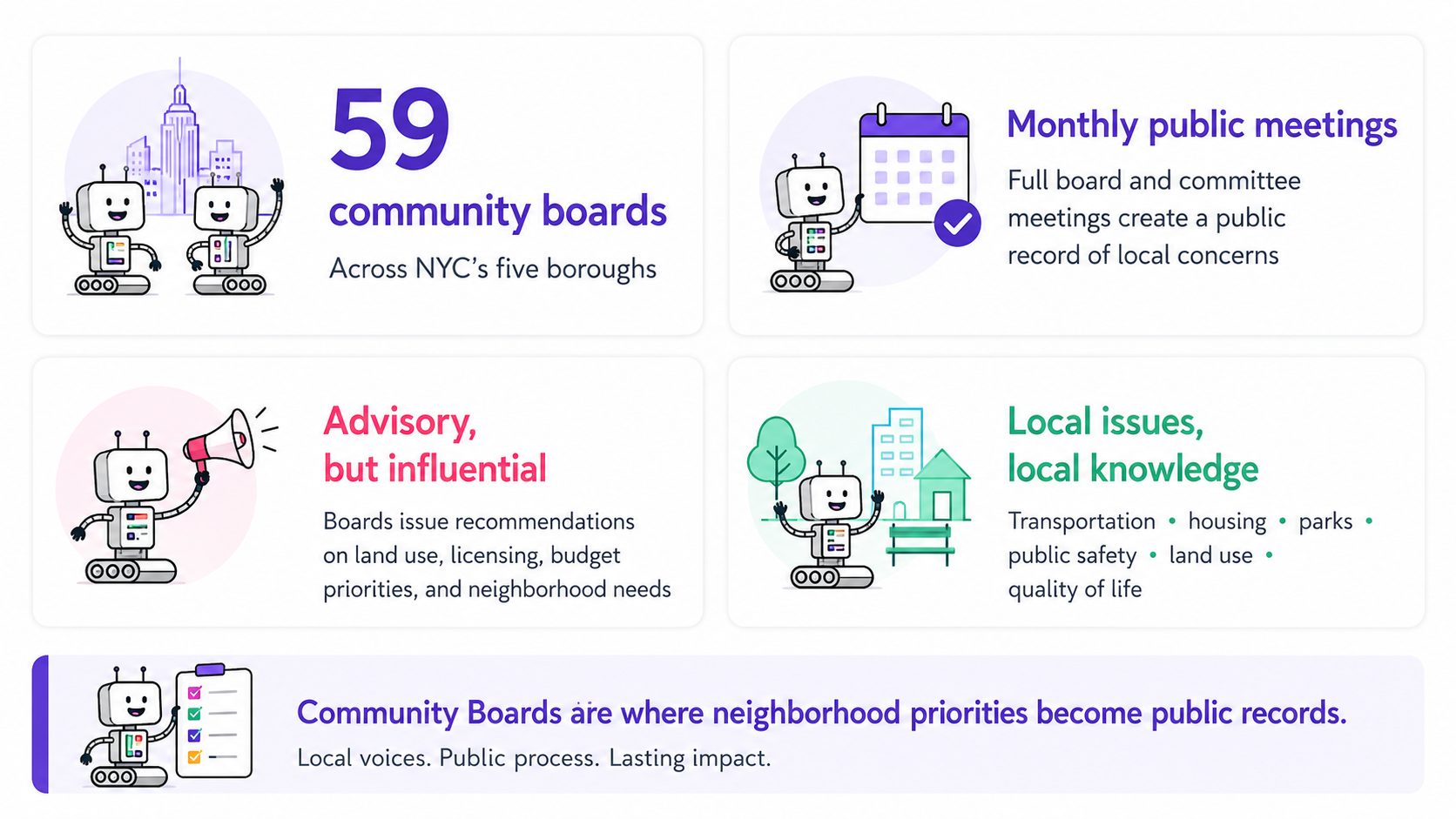
Agenda
Part 1: The Problem & Opportunity
Part 2: Our Solution & Workflow
Part 3: Demo time
Q&A

Had to make the transcripts ourselves…
The Problem & Opportunity
• The Information Problem
• What is a Resolution
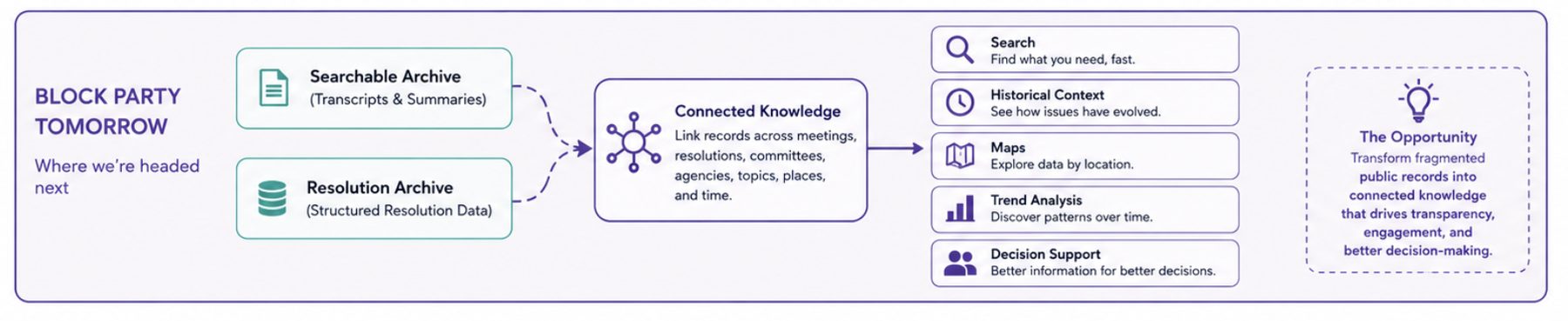
• The Technology Opportunity
Had to make the transcripts ourselves…
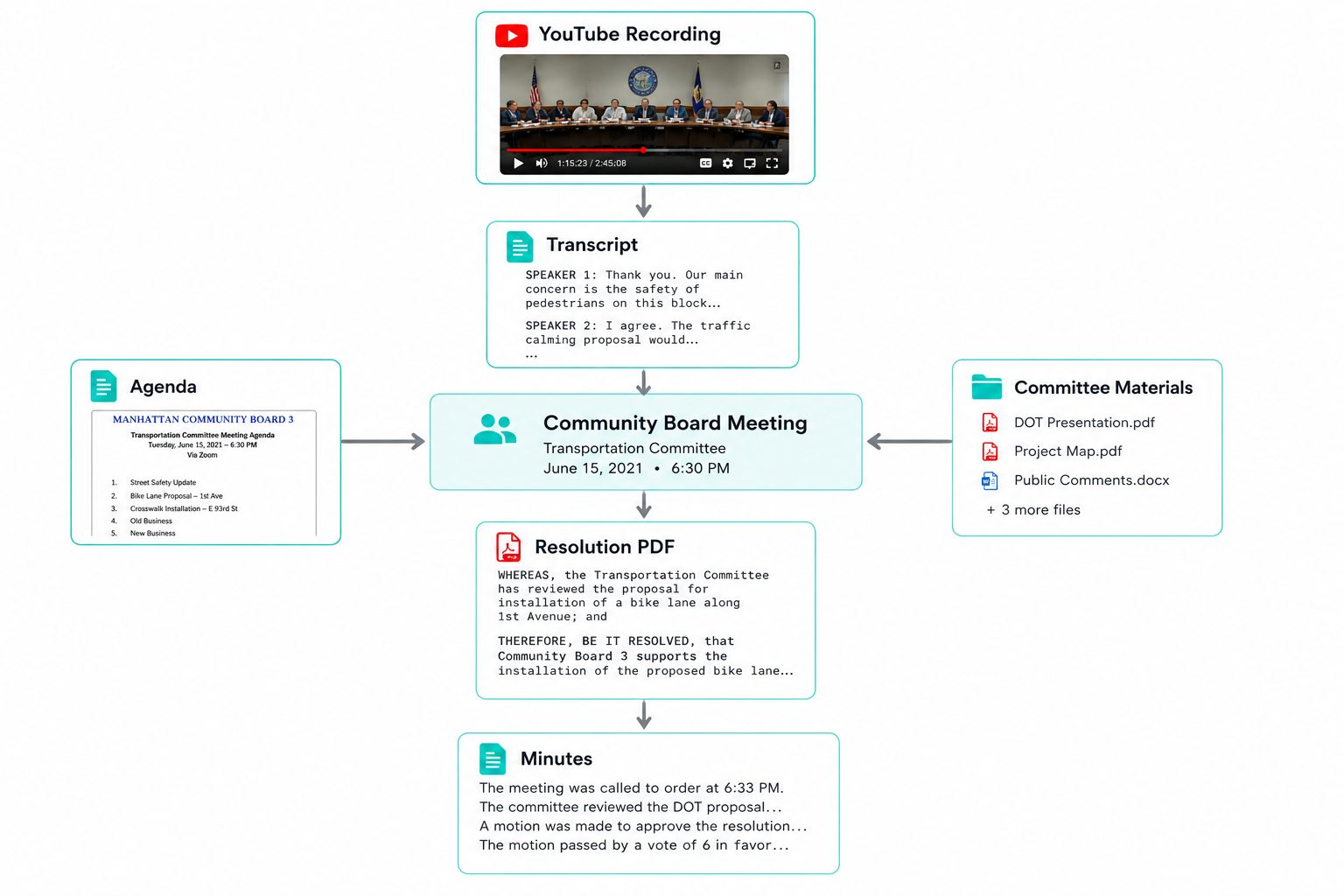
The Information Problem
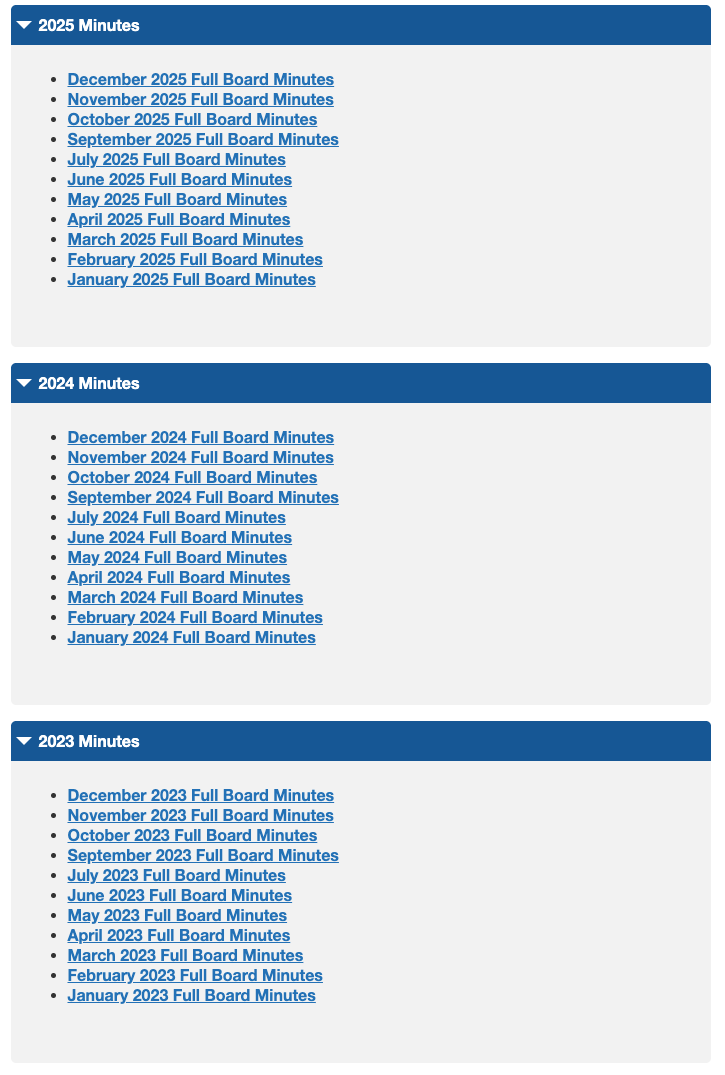
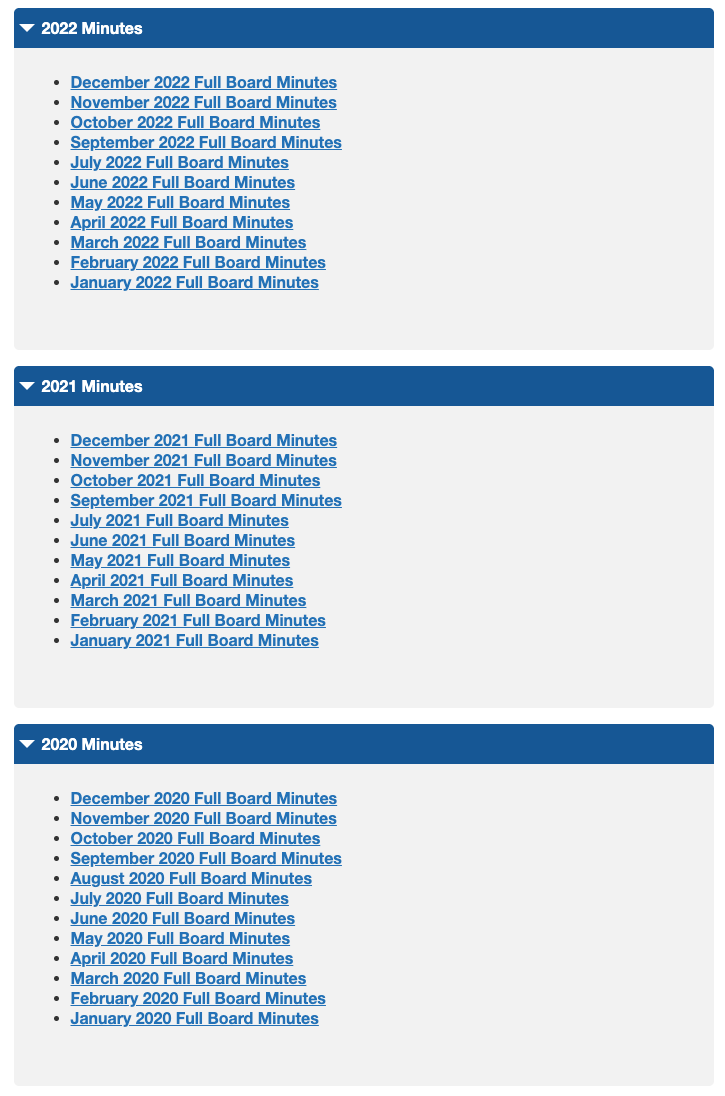
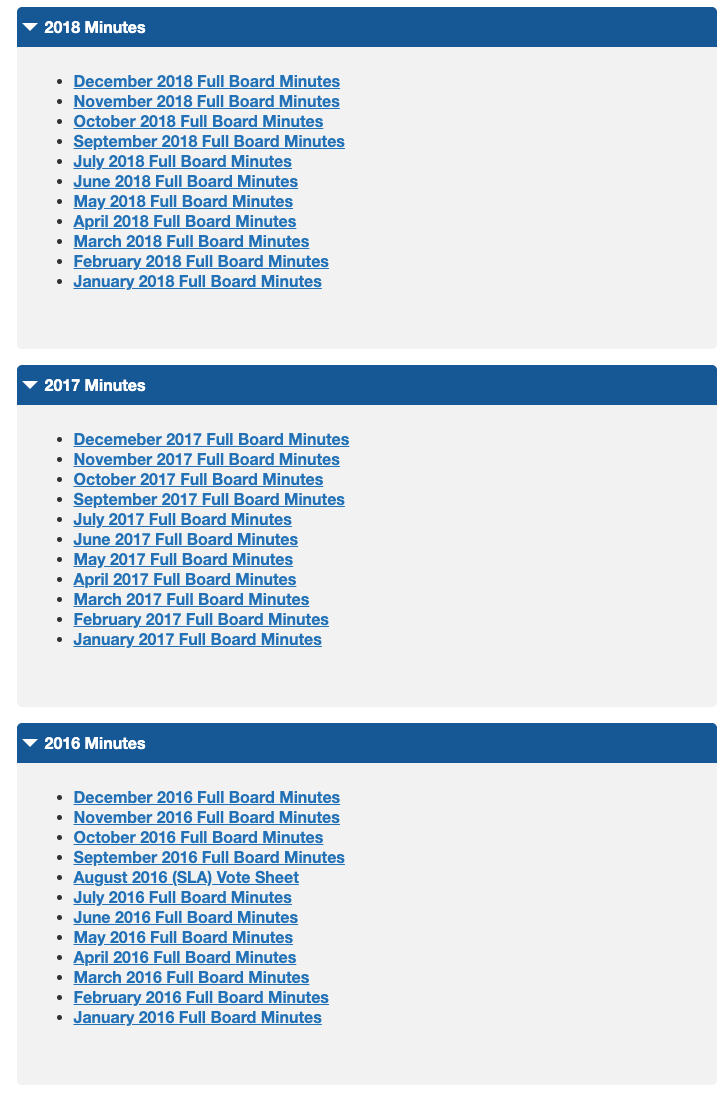
The information problem, everything exists and is publicly accessible. But nothing is really connected or searchable at scale. We started with building the transcripts so we could create and share a weekly summary, as the project has evolved we are now expanding our archive into the disparate resolution PDFs which we will share our workflow. We would argue the main challenge isn’t lack of information, it’s making the public information more usable for the public engagement.
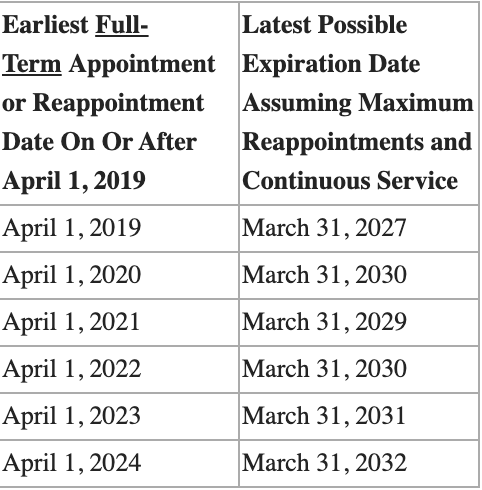
Table from the Office of the Manhattan Borough President
Community Board member term limits begin in 2027 - is local government prepared for the significant loss of institutional knowledge?
Term Limits Are Coming
This is a problem Block Party can help solve
When Key Community Decisions Become More Accessible
Analytics Opportunity
• Search thousands of resolutions by address, business name, or topic
• Track a community board’s position on recurring issues over 20+ years
• Identify patterns on controversial issues
With NLP / Embeddings
• Semantic search: ‘Find all resolutions about outdoor dining’
• Cluster resolutions by topic or location
• Detect shifts in sentiment and language over time
• Compare positions across community boards
CivicAccountability
• Flag if city agencies ignore a resolution
• Track liquor license denial → approval
• Explore how community boards respond to the needs of their district
• Knowledge base linking resolutions to the meeting discussion
Potential Insight
Particularly with term limits, access to institutional knowledge is even more important!

· What a database unlocks: Longitudinal analysis: “how has MCB3’s posture on liquor licensing changed?”
· Pattern detection: what gets denied vs. approved?
· Semantic search by address, business, or policy topic
Use case possibilities:
Extract locations that are discussed to search by business name, address, agency, permit type
Now we transition into Block Party’s newest feature and what we built:
Our Solution & Workflow
• Data Landscape
• How We Built It
• Archival Search and Mapping
Had to make the transcripts ourselves…
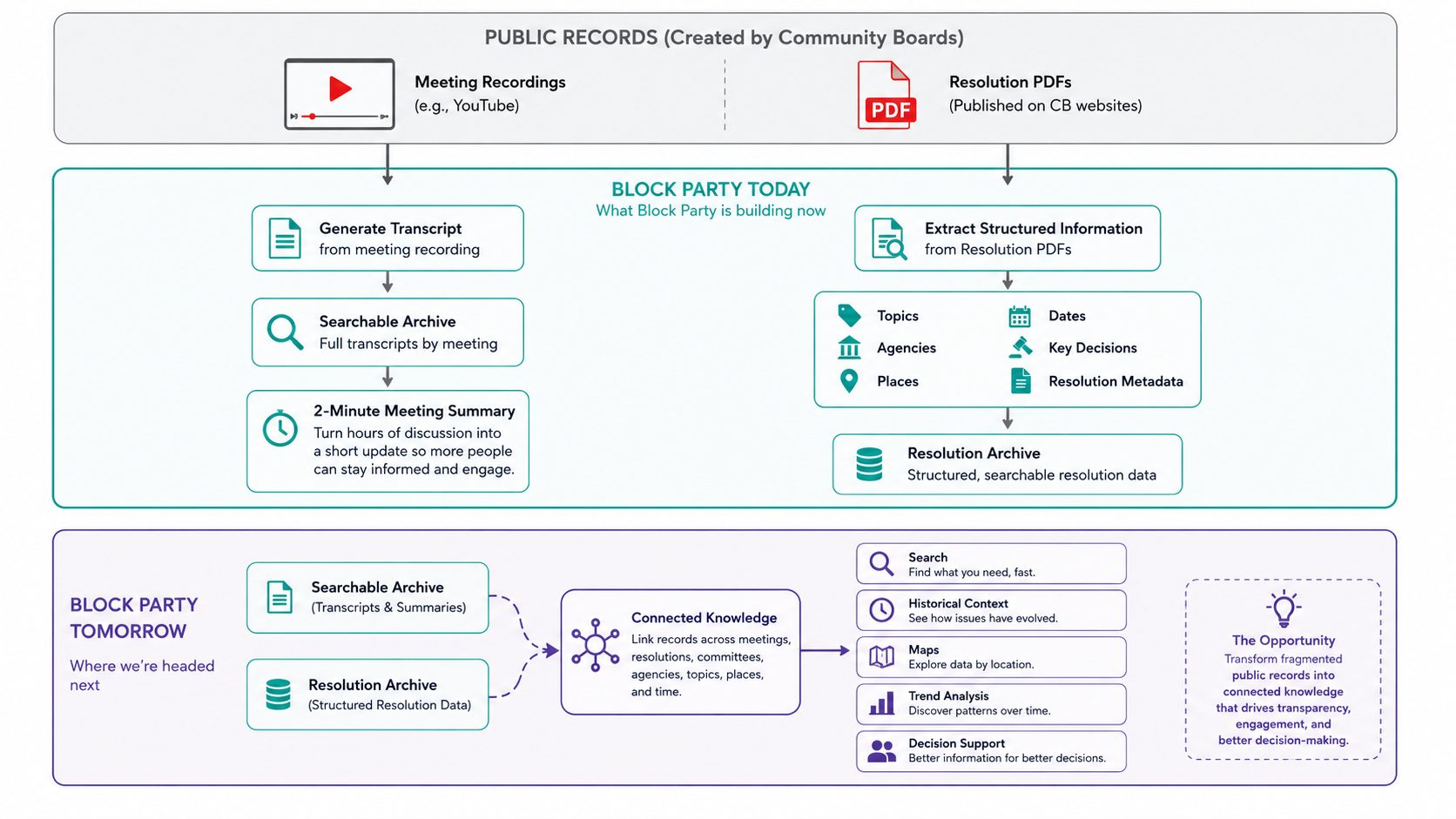
The Information Problem
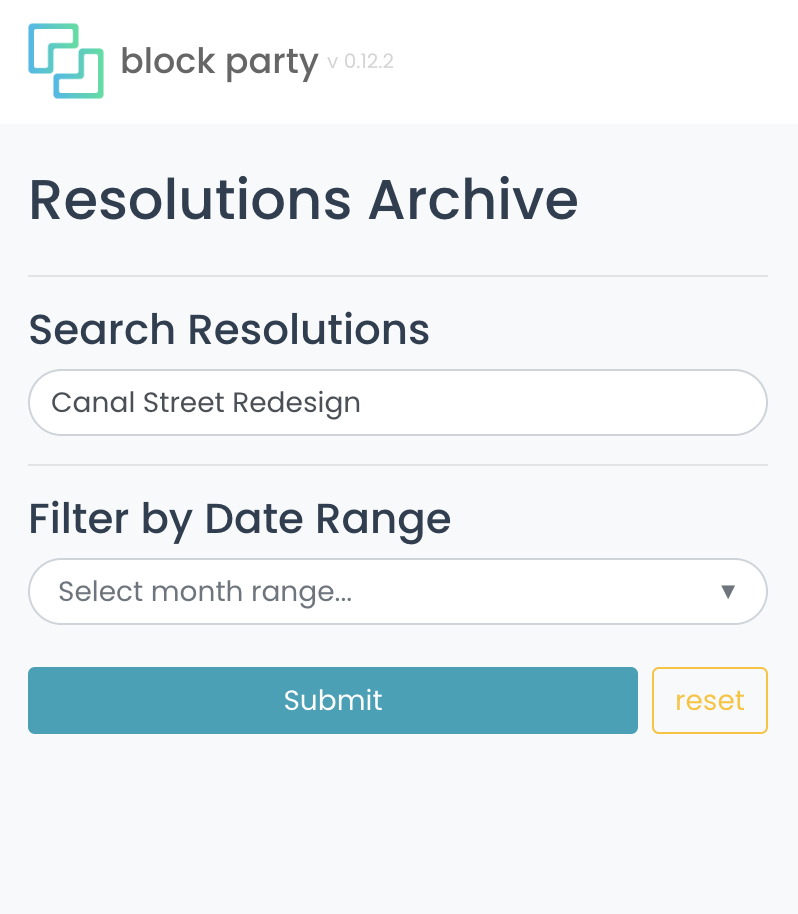
Now here is what we did for resolutions. The rest of this presentation will be about Block party’s newest feature where we developed a searchable archive for community board 3 resolutions.
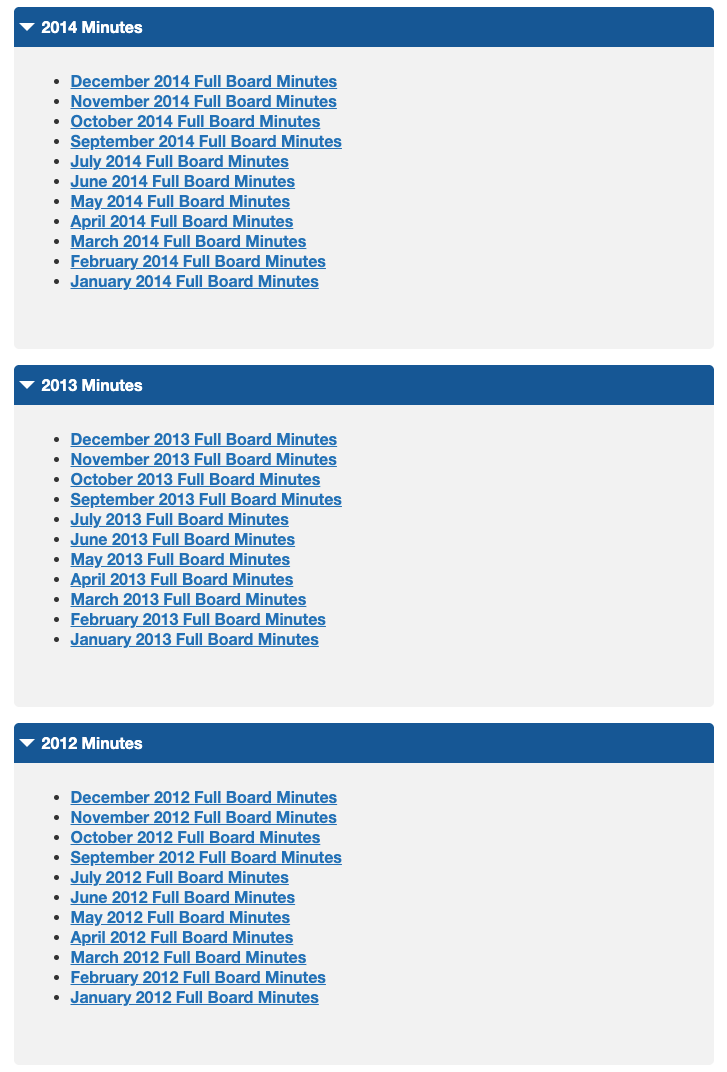
You would have had to click through 17 years of resolutions. Who is going to do that? This makes it searchable.
information but would take forever to read
268 meeting PDfs you have to look through manually, within those.
Create Vector Embedding
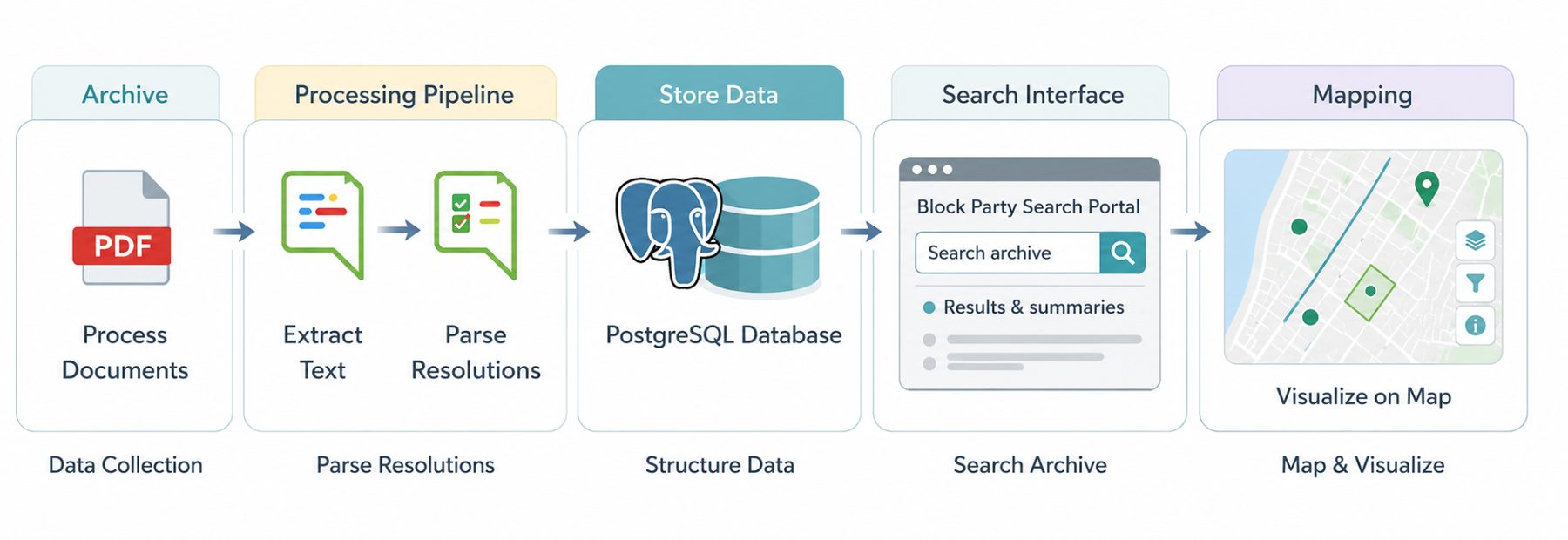
Generate Summary
Extract Entities
Locations
Entities
Topics
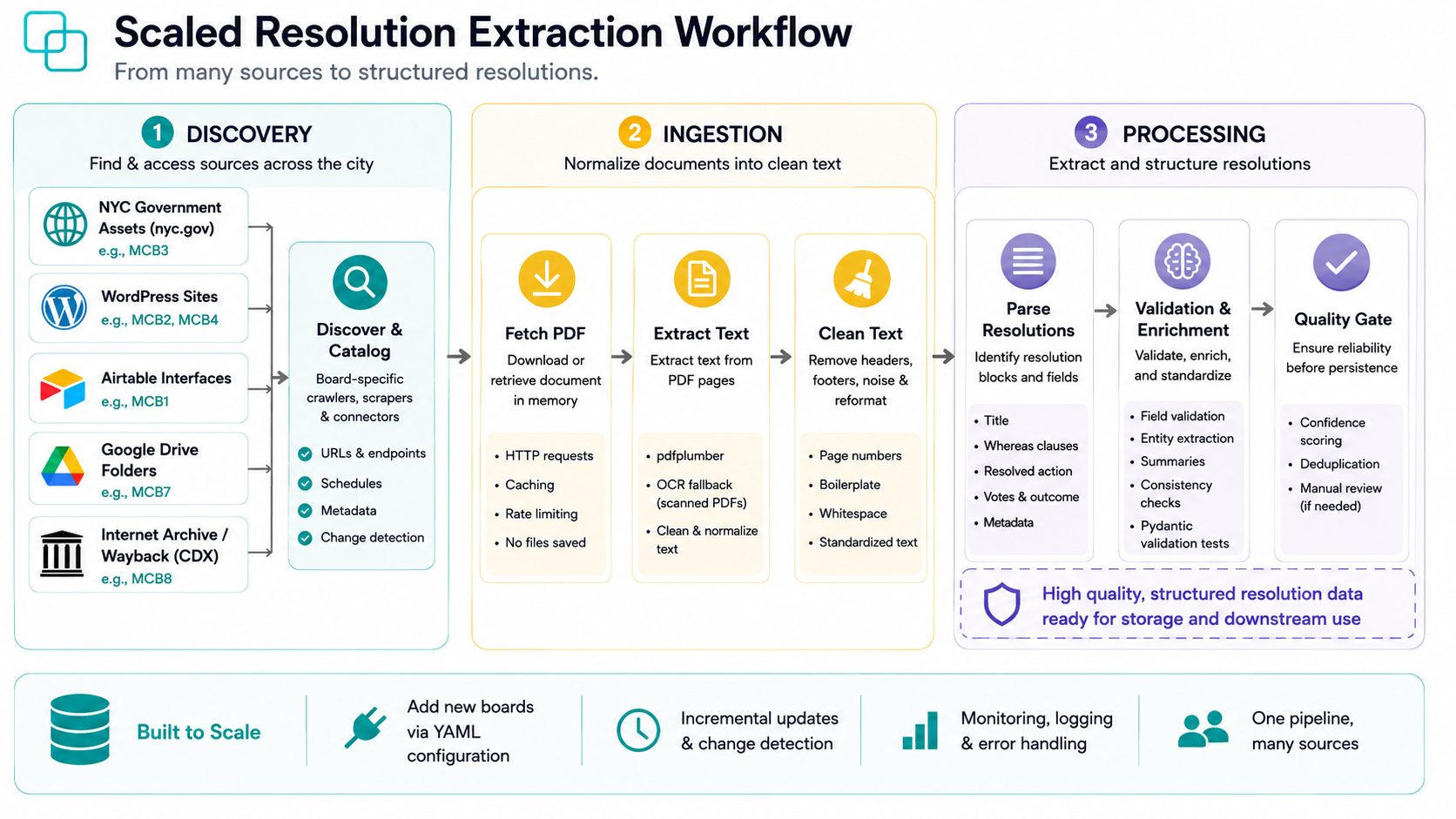
How We Built The Resolutions Archive
First we
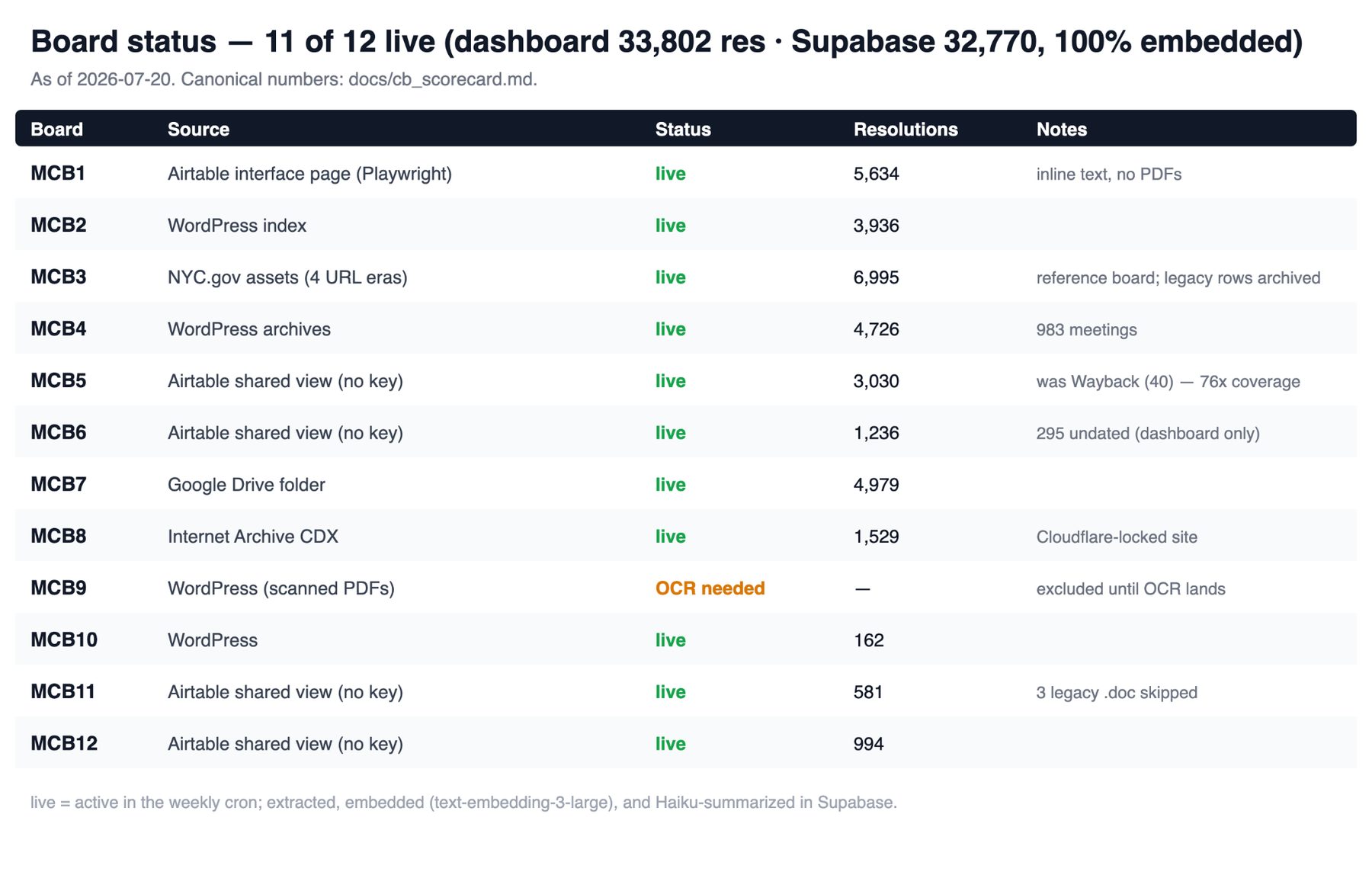
Scaling Up
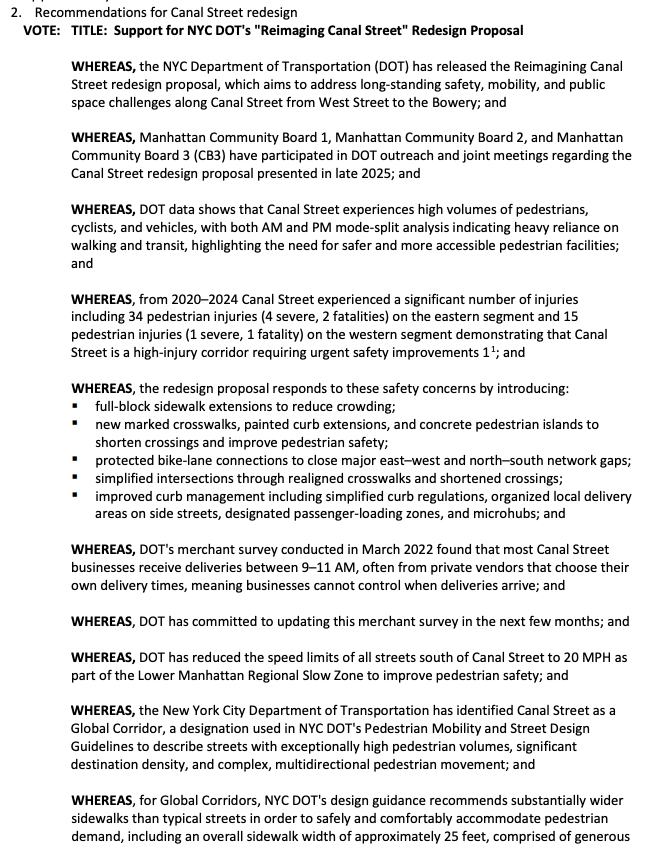
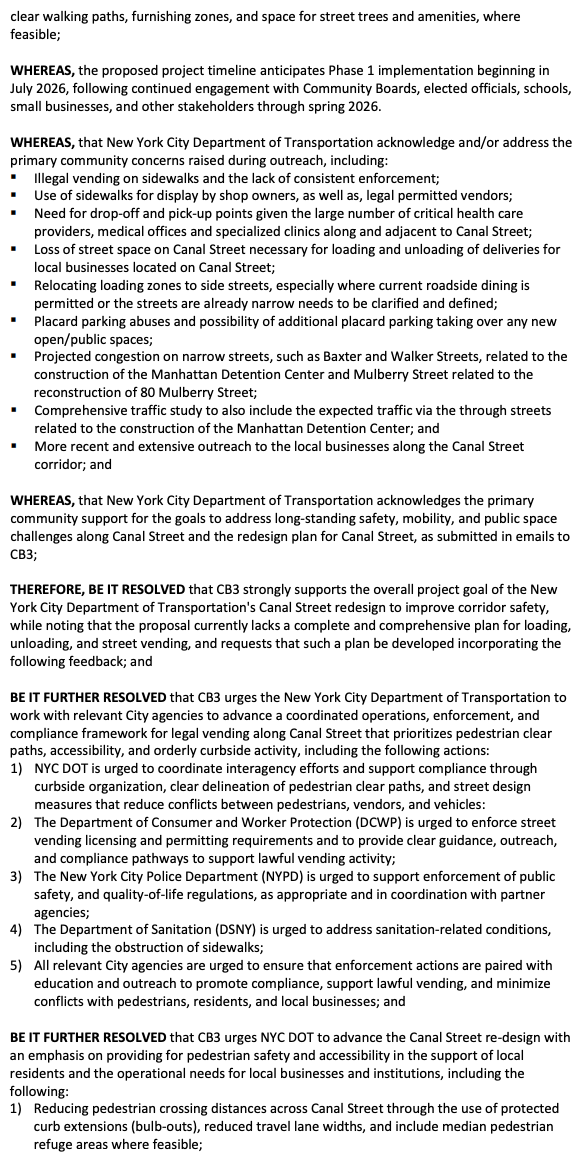
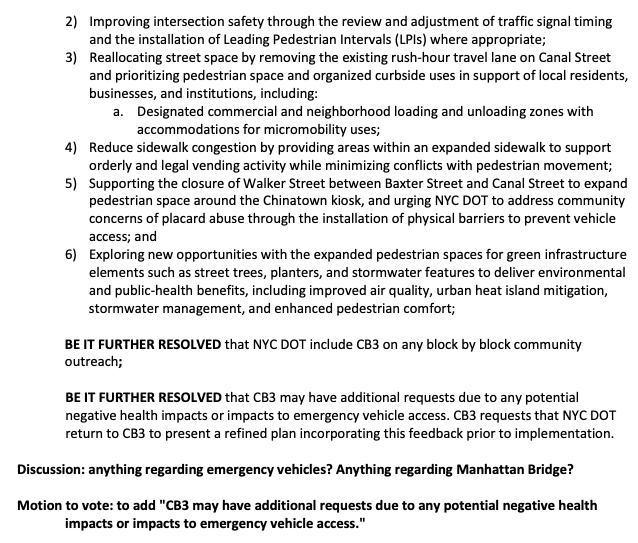
Who wants to read this?
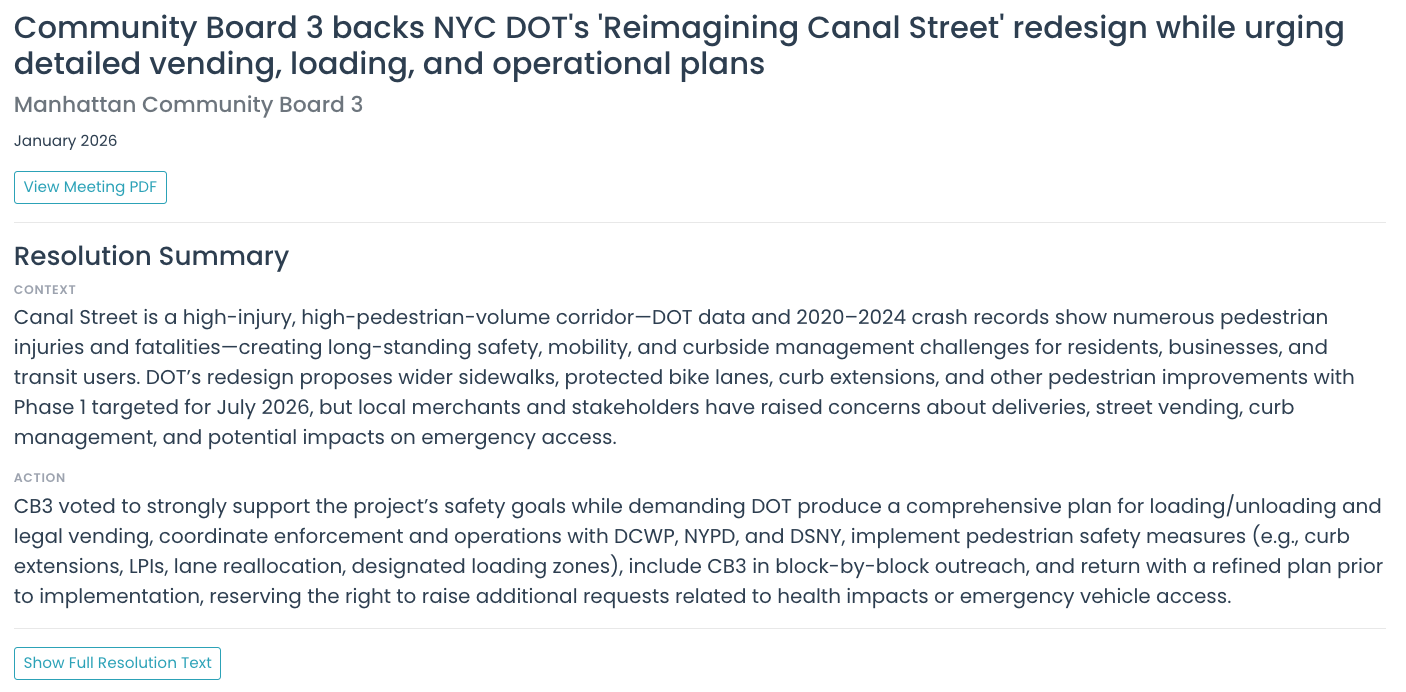
Community concerns
Reliable data points
Locations
Entities
Topics
Next steps
Resolutions as a Data Source
We created a summary from the full resolution text in order to make the information more accessible. Here is what the full resolution looked like
Community concerns
Reliable data points
Locations
Entities
Topics
Next steps
Resolutions as a Data Source
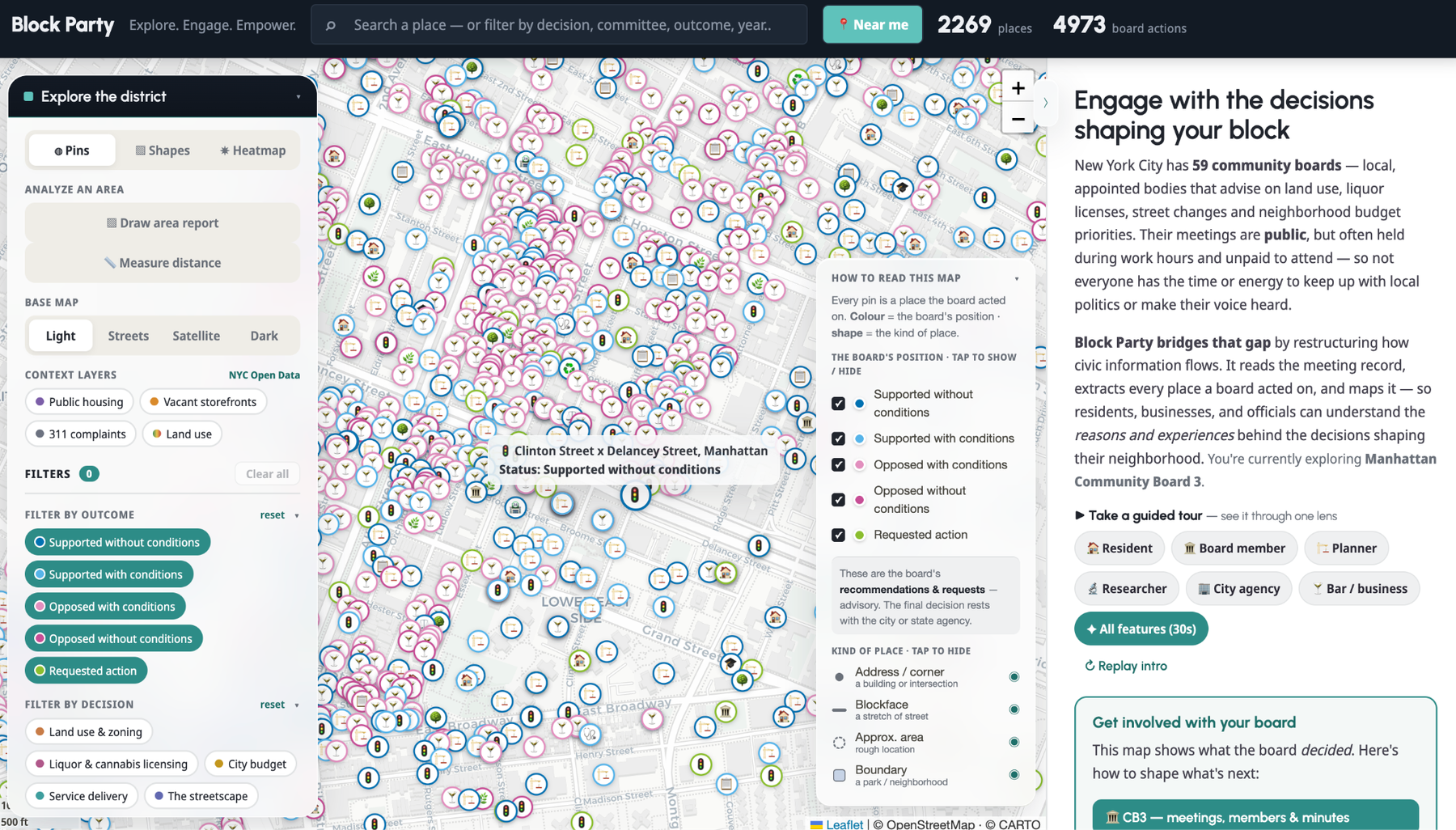
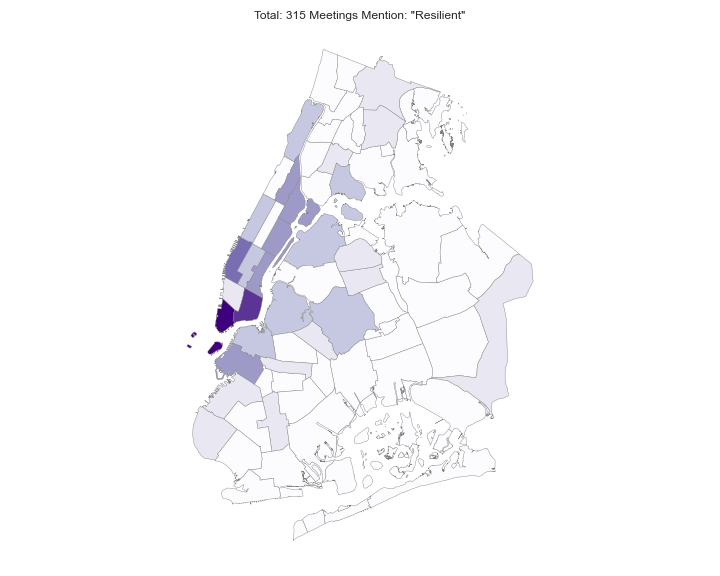
What if we could map the locations mentioned?
We created a summary from the full resolution text in order to make the information more accessible. Here is what the full resolution looked like
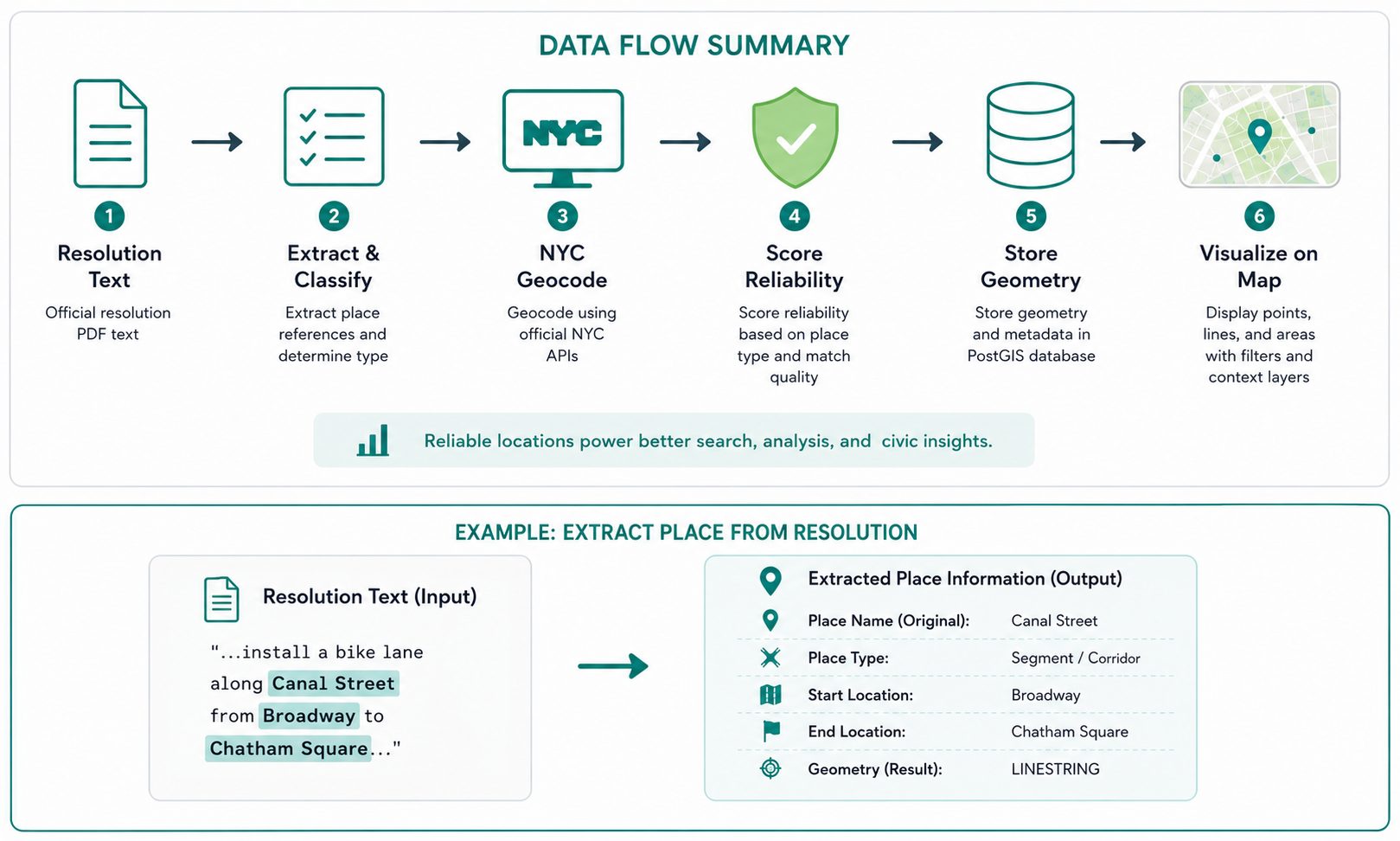
Mapping Resolutions
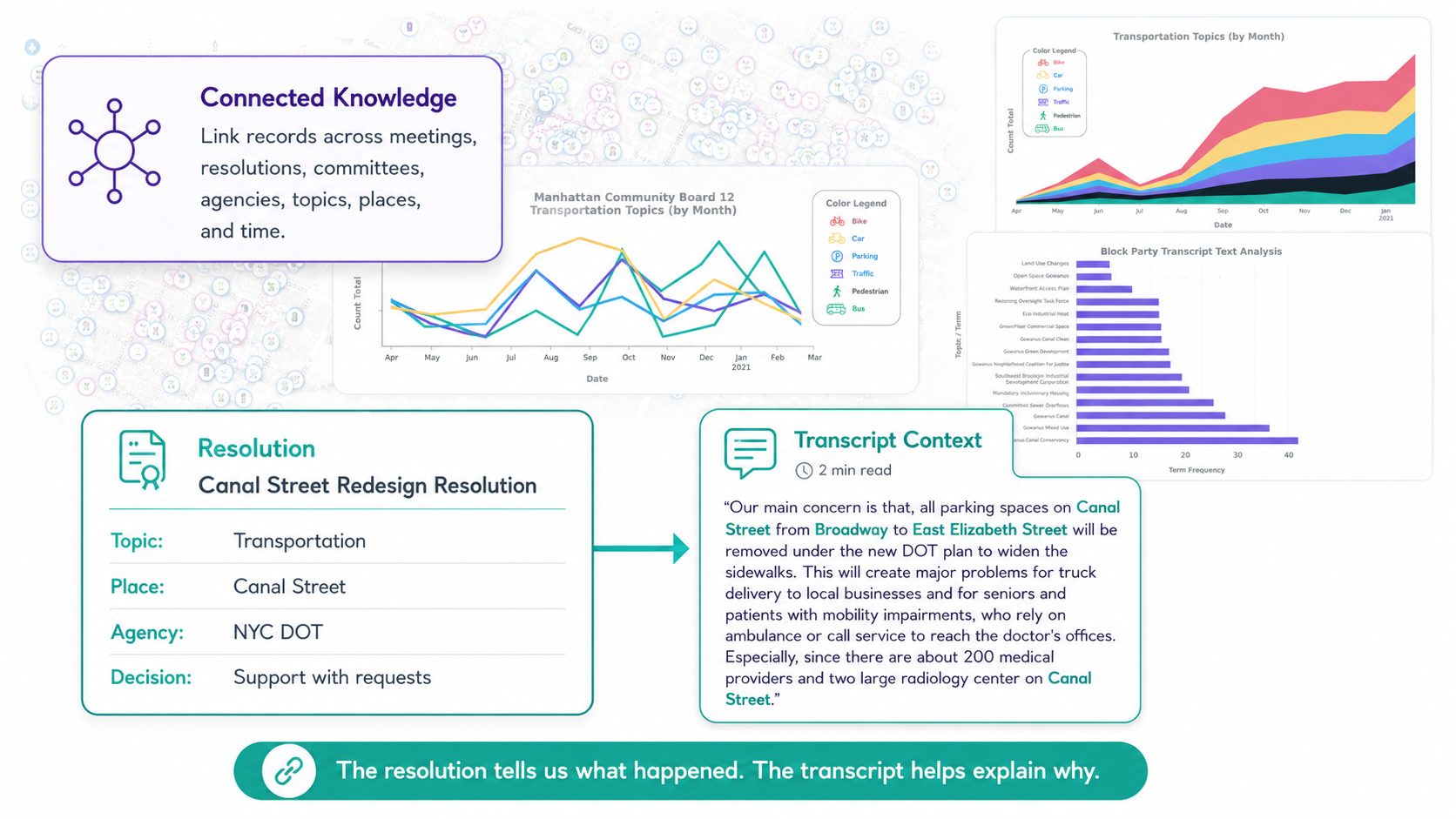
What if we could dive into the meeting discussion?
Demo Time!
Had to make the transcripts ourselves…
Q&A

Appendix
Had to make the transcripts ourselves…

How the Extractor Works — Three-Step Pipeline
1
Fetch PDF
• HTTP request to nyc.gov
• Processed in memory—no files saved
→
2
Extract text
• pdfplumber reads all pages
• Concatenates raw text string
→
3
Parse & store
Regex splits text:
• Find resolution chunks (VOTE:)
• Split by markers TITLE:WHEREAS: THEREFORE:
Create Vector Embedding
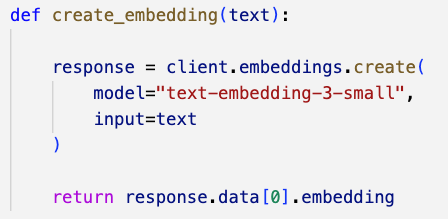
Pause to ask if folks are familiar with vector embeddings
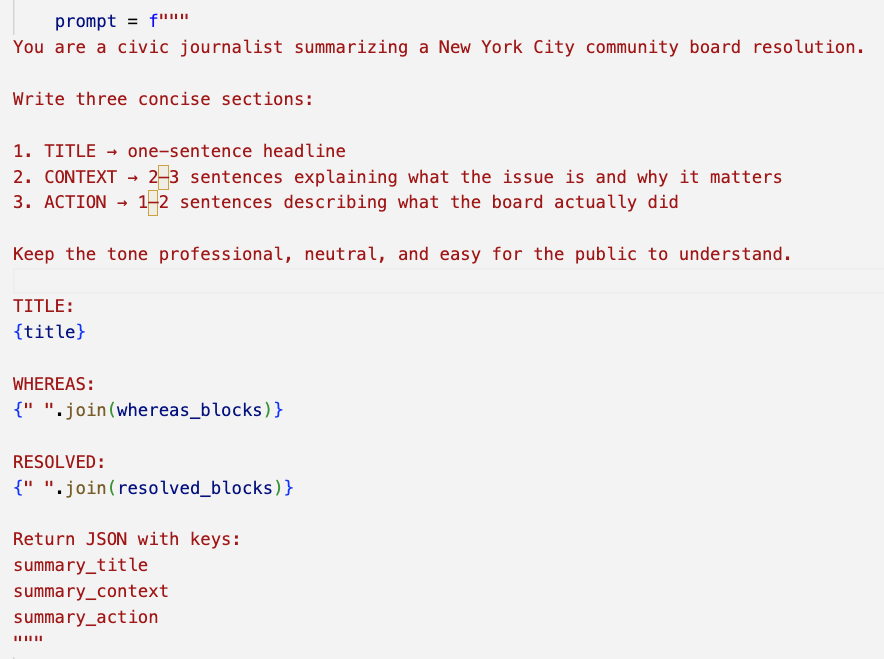
Generate Summary
• Group text chunks by each section of the resolution
• Send to a prompt
• Specify the output structure
The Source Data — Community Board Website PDFs
Community boards post all meeting minutes and resolutions publicly, but in different formats and structures.
2021 – present
manhattancb3/downloads/minutes/YYYY/minutesYYYY-MM.pdf
2004 – 2020
manhattancb3/downloads/minutes/minutesYYYY-MM.pdf
2002 – 2003
manhattancb3/cb3docs/reso-archive/MM-Name-YYYY-Resolutions.pdf
Challenge: each era has different PDF formatting, vote tally conventions, and resolution structure.
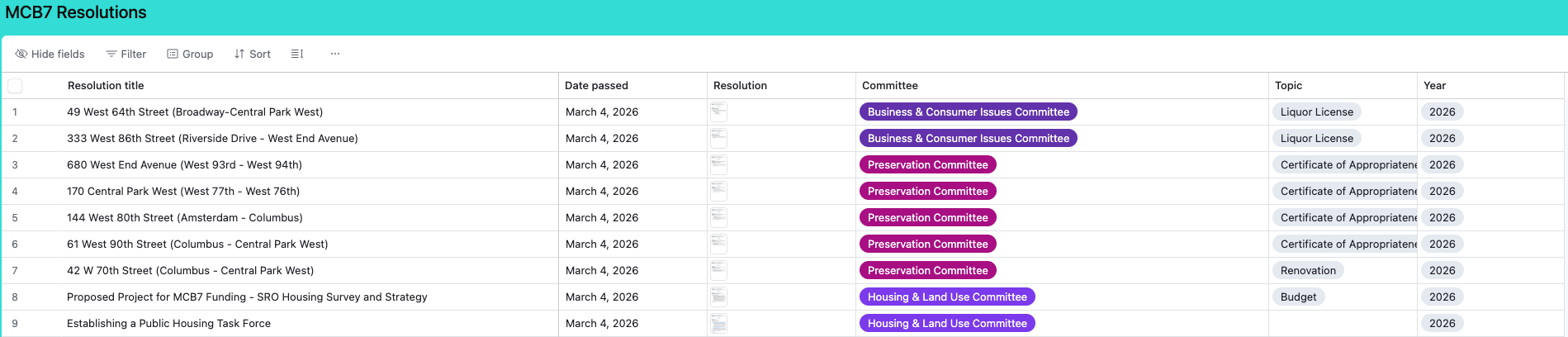
It’s exciting to see some community boards have adopted solutions like Airtable!